Published on
- 4 min read
The FIRE Movement: What It Actually Takes to Retire a Decade Early

The idea spread across American culture in the mid-2010s like a quiet revolution. People in their thirties and forties, living below their means, saving aggressively, and retiring years or even decades earlier than the traditional retirement age of 65. They called it FIRE: Financial Independence, Retire Early.
The movement has since spawned books, podcasts, online communities, and a cottage industry of financial advice. But behind the viral success stories lies a set of ideas worth examining honestly.
The Core Idea
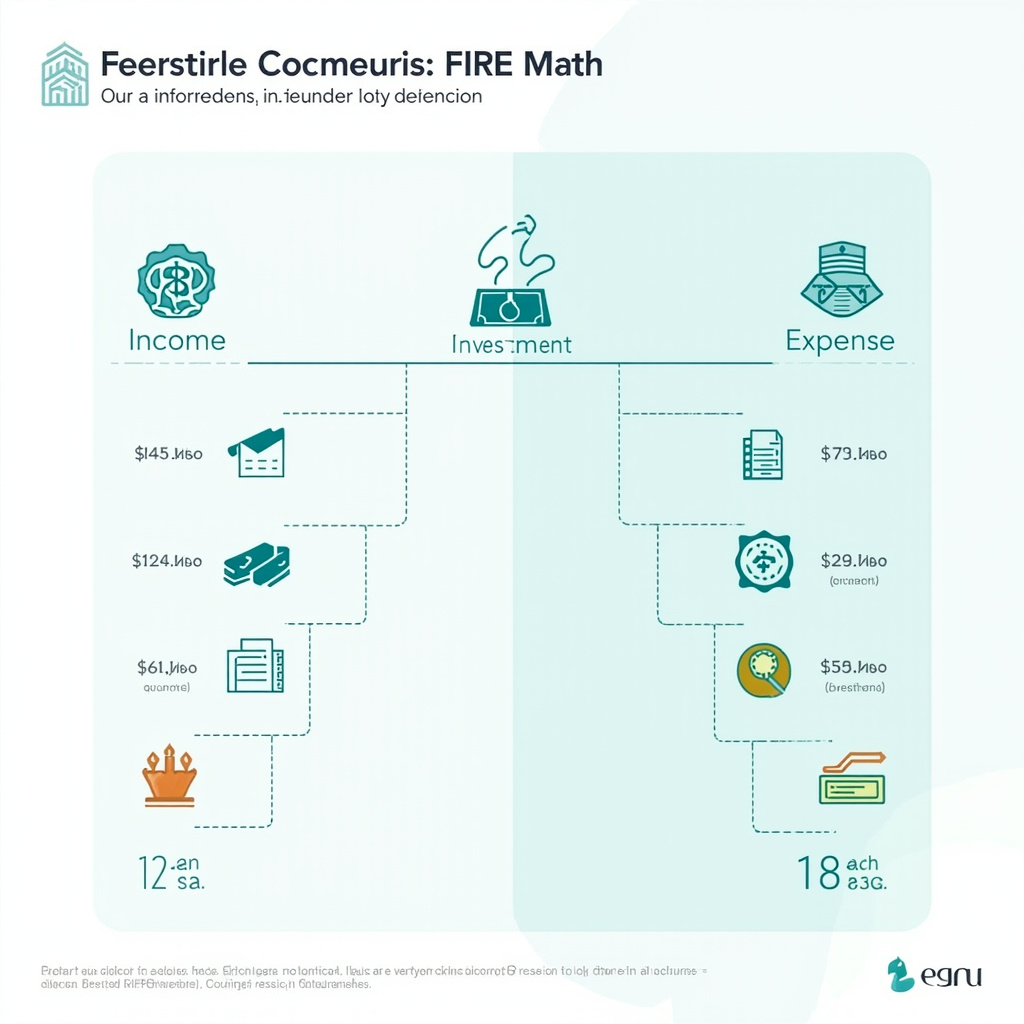
FIRE is built on a simple mathematical insight: if your annual spending is low enough relative to your savings, and you invest those savings over a long enough period, the investment returns will eventually generate enough income to cover your expenses indefinitely. At that point, you are no longer trading time for money. You have achieved financial independence.
The traditional rule of thumb is that you need 25 times your annual expenses saved to retire, based on the 4% withdrawal rule. This rule suggests that you can safely withdraw 4% of your portfolio each year in retirement without running out of money over a 30-year period.
The Movement’s Real Appeal
Understanding why FIRE gained so much traction requires looking beyond the math. The appeal is not primarily about having more money or retiring earlier. It is about reclaiming agency over your time.
Most Americans work roughly 40 hours a week for 40-plus years, waiting for retirement. FIRE proposes an alternative: what if you could reach the point where your investments support your lifestyle? What if you could choose how to spend your days without the constraint of a paycheck?
The underlying desire is not leisure. It is autonomy.
What the Viral Stories Leave Out
FIRE success stories are everywhere, and most feature high earners. The software engineer who FIRE’d at 35. The physician who retired at 45. These are real people, but they are not representative of the broader population.
The math of FIRE is brutal for average earners. If you earn $50,000 per year and want to maintain a lifestyle that costs $40,000 per year, you need $1,000,000 saved (25x expenses). Saving 50% of your income — an aggressive target — means putting away $25,000 per year. At a 7% annual return, that takes roughly 20 years. You would be financially independent in your forties or fifties, not your thirties.
The viral stories often omit that the protagonists had six-figure incomes, no children, or lived in low-cost areas. They also frequently continue earning money through side projects, blogs, or part-time work — meaning they did not truly “retire” in the traditional sense.
The Real Challenges
FIRE is not just a math problem. It is a lifestyle problem.
Social isolation is common. When your peers are working and you are not, maintaining relationships becomes harder. Identity loss is real — many people derive significant meaning from their careers, and leaving them can create a void that travel and hobbies do not fill.
Healthcare is a major concern in the United States. Retiring before Medicare eligibility at 65 means paying for private insurance — often $10,000 to $20,000 per year for a family — or going without, which is a gamble most are unwilling to take.
Sequence-of-returns risk is the technical term for what happens if the market drops significantly in your first years of retirement. A 20% decline early in retirement can permanently impair your portfolio’s ability to sustain withdrawals over decades.
A More Realistic Approach
You do not need to fully FIRE to benefit from FIRE principles. Consider partial FIRE or coast FIRE:
- Partial FIRE means reaching a point where you only need to work part-time or in lower-paying but more fulfilling work to cover expenses.
- Coast FIRE means saving aggressively in your twenties and thirties, then letting compound growth do the rest while you take a lower-stress job that covers current expenses but does not require additional savings.
Both approaches offer much of the autonomy that full FIRE promises without requiring extreme frugality or a six-figure income.
The Bottom Line
The FIRE movement has done something valuable: it challenged the default assumption that everyone must work until 65. It proved that with high savings rates and disciplined investing, financial independence is achievable earlier than conventional wisdom suggests.
But the movement also has a selection bias problem. The stories that go viral are not representative of what is possible for most people. The math is real, but it is also restrictive. Achieving FIRE in your thirties requires either a very high income, a very low cost of living, or both.
For most people, the better path is not early retirement but financial flexibility. Save enough to have options. Build a portfolio that gives you the freedom to change careers, take sabbaticals, or work less without jeopardizing your future. That is a goal worth pursuing — and it is far more achievable than the viral stories suggest.

Related Articles

The 50/30/20 Budget Rule: Your Simple Blueprint for Financial Freedom
Learn the simple 50/30/20 budgeting method that helps you allocate your income wisely without compli...

Compound Interest: The Most Powerful Force in Finance
Discover why Einstein called compound interest the eighth wonder of the world and how to harness its...

6 Costly Money Mistakes Most Americans Make
Learn about the six most common and expensive financial mistakes that keep Americans broke, and how ...