Published on
- 4 min read
Tax-Loss Harvesting: The Strategy That Turns Losses Into Tax Savings

There is a strange irony at the heart of investing: when your portfolio drops, it can actually save you money on your taxes. That is not a typo. In the U.S. tax system, realized losses are a legitimate currency — one that most retail investors leave completely on the table.
The strategy is called tax-loss harvesting, and it is one of the most powerful, most underused tools available to everyday investors with taxable brokerage accounts.
What Is Tax-Loss Harvesting, Really?
At its core, tax-loss harvesting is the deliberate act of selling an investment that has declined in value to realize a capital loss, then using that loss to offset other gains or reduce your taxable income.
Here is how it works in practice. Say you bought shares of a tech ETF at $10,000. A few months later, market turbulence has pushed the value down to $7,500. You sell — locking in a $2,500 realized loss. That loss can now be used to reduce your tax bill elsewhere.
The key word is realized. A paper loss — the number on your screen that makes you uncomfortable — does nothing at tax time. Only when you sell does the loss become real in the eyes of the IRS.
This is why disciplined tax-loss harvesting requires emotional discipline as well. While everyone else is watching their portfolio drop and feeling anxious, the tax-savvy investor is quietly identifying which positions to sell at a loss to generate the most valuable deductions.
Why Losses Are a Tax Asset, Not Just a Problem
The U.S. tax code treats capital gains and capital losses differently based on where they come from:
- Short-term capital gains — profits from assets held for one year or less — are taxed at your ordinary income tax rate. In 2026, that means up to 37% for the highest earners.
- Long-term capital gains — from assets held more than a year — are taxed at preferential rates: 0%, 15%, or 20% depending on your taxable income.
But the real magic is in the loss side. When you realize a capital loss, the IRS allows you to use it in three ways:
- Offset capital gains dollar for dollar. A $3,000 loss cancels out $3,000 in gains, eliminating the tax on those gains entirely.
- Offset up to $3,000 of ordinary income per year. If your losses exceed your gains, you can deduct up to $3,000 against your regular income — saving you money at your highest marginal tax rate.
- Carry forward excess losses indefinitely. Any losses beyond what you can use this year roll forward to future years, creating a tax asset that keeps giving.
The Wash-Sale Rule: The Trap to Avoid
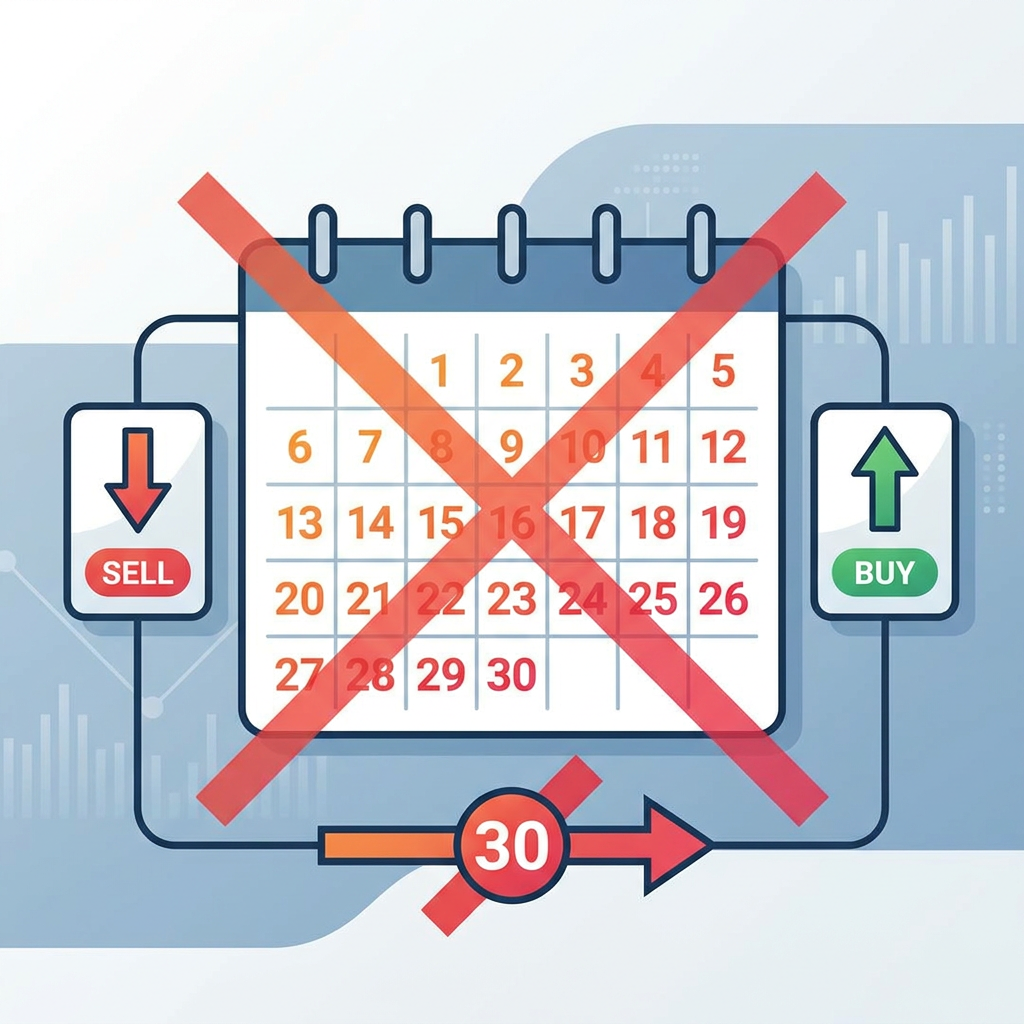
The IRS is not naive. They know about tax-loss harvesting, and they have a rule to prevent abuse: the wash-sale rule.
If you sell an investment at a loss and buy the same or a “substantially identical” security within 30 days before or after the sale, the loss is disallowed. The IRS treats it as if the sale never happened for tax purposes.
The workaround is simple: buy something similar but not identical. If you sell an S&P 500 index fund at a loss, you can immediately buy a total stock market index fund or a Russell 1000 fund. You maintain similar market exposure without triggering the wash-sale rule.
Many robo-advisors automate this process, selling a losing position and immediately buying a correlated but not identical alternative. For DIY investors, the key is to plan the replacement investment before executing the sale.

When to Harvest
The best time to harvest losses is during market downturns — when your portfolio has positions trading below your purchase price. Many investors do this review at year-end, but there is no rule saying you must wait. Some investors harvest losses quarterly or whenever the market drops significantly.
The key is to have a system. Set a threshold — perhaps any position down 10% or more — and review your portfolio regularly. The tax savings can be substantial over time.
The Bottom Line
Tax-loss harvesting is not about timing the market or making risky trades. It is about being tax-smart with the investments you already own. It turns the inevitable market declines into a financial advantage.
Most investors never do this because they do not know it exists, or because it feels wrong to “sell at a loss.” But the math is clear: harvesting losses is one of the few ways to improve your after-tax returns without taking additional risk.
If you have taxable investment accounts and have never explored tax-loss harvesting, you are probably leaving money on the table. Talk to a tax professional or financial advisor about implementing this strategy. The savings can be real, immediate, and recurring — year after year.

Related Articles

The 50/30/20 Budget Rule: Your Simple Blueprint for Financial Freedom
Learn the simple 50/30/20 budgeting method that helps you allocate your income wisely without compli...

Why Your Savings Account is Costing You Money
Discover why keeping all your money in a traditional savings account might be silently eroding your ...

Compound Interest: The Most Powerful Force in Finance
Discover why Einstein called compound interest the eighth wonder of the world and how to harness its...