Published on
- 3 min read
Mortgage Rates in 2026: Where They Stand and Where They Are Heading
What 6.47% Actually Costs You in 2026
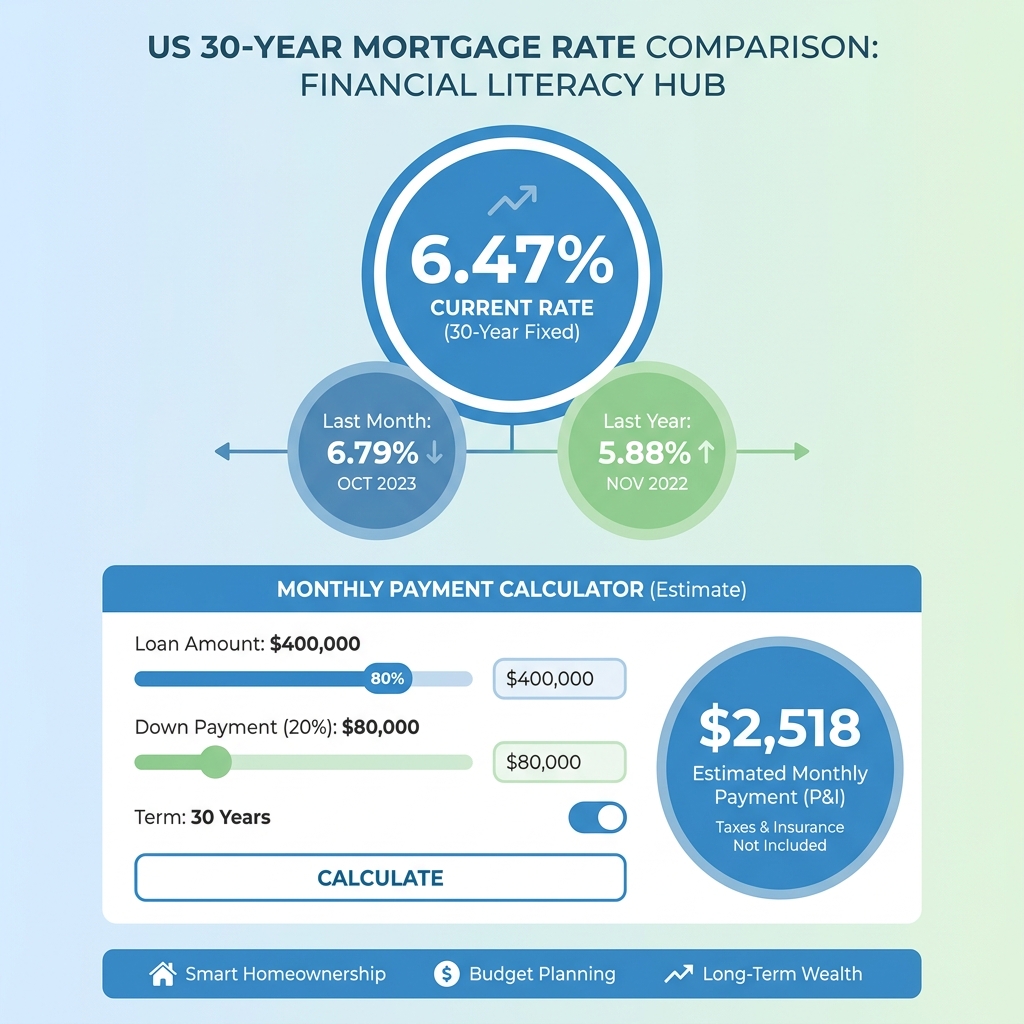
Take a $400,000 30-year mortgage at 6.47%. The monthly principal and interest payment is roughly $2,522. The same loan at 5.50% would be $2,271, a difference of $251 a month, or about $3,015 a year and $90,450 over the life of the loan. Stretch to a $600,000 mortgage at 6.47% and the monthly payment climbs to about $3,784, versus $3,406 at 5.50%, a gap of $378 a month. These are not small numbers. The difference between 6.47% and 5.50% is functionally a second car payment for many buyers, and it is the single biggest reason housing affordability has been stuck for the past three years.
The Case for Buying Now
The waiting-for-lower-rates crowd has been on the sidelines for two years. Most of them have watched rates fall from 7.79% in late 2023 to 6.13% in early 2026 and concluded that the smart move is to keep waiting. But that is what got them stuck in the first place. There are three reasons the math now leans toward buying.
First, the rate you can negotiate on the house itself dwarfs the rate on the mortgage. If you buy in a market with a 4.5-month supply of inventory, a seller who has been sitting on a listing for 60 days will often knock 2 to 4 percent off the asking price. On a $429,000 home, a 3 percent price reduction is $12,870, which more than offsets the higher monthly payment on a 6.47% mortgage versus a 5.50% one for the first four years.
Second, the Fed has limited room to cut, and the bond market is fighting the Fed. The Federal Reserve held the federal funds rate at 3.50% to 3.75% at its June 17 meeting, but the dot plot showed nine members favoring a rate hike by year-end. Mortgage rates are more likely to rise than fall in the near term.
Third, rent is not standing still either. The Apartment List national rent index shows rents up 4.2% year over year as of May 2026. In many markets, buying at 6.47% is already cheaper than renting a comparable home.
The Case for Waiting
If you are buying your forever home and plan to stay for 15+ years, a 100 basis point rate drop would save you $90,000 on a $400,000 loan. That is real money. If you are stretching to afford the payment at 6.47%, a rate drop to 5.50% could be the difference between qualifying and not qualifying.

How to Get the Best Rate in 2026
Shop at least three to four lenders. The gap between the cheapest and most expensive lender for the same borrower on the same day can be 50 to 75 basis points. Improve your credit score to 740 or above for the best conventional rates. Consider buying discount points if you plan to stay in the home long enough to break even. Each point costs 1% of the loan amount and typically lowers the rate by 0.25%. On a $400,000 loan, one point costs $4,000 and saves roughly $60 per month.
The Bottom Line
Mortgage rates at 6.47% are painful but not unprecedented. Buyers who have been waiting for 5% rates since 2023 have already missed the 6.13% trough in February 2026. The Fed is hawkish, inflation is persistent, and the bond market is not pricing in meaningful rate cuts. If you find a home you can afford at today’s rates, the best financial move may be to buy it, negotiate hard on price, and refinance if rates drop. Waiting for a rate that may never come is a gamble, and the house you want may not be available when it does.
Sources: Freddie Mac Primary Mortgage Market Survey, June 18, 2026; National Association of Realtors existing-home sales release, June 9, 2026; Federal Reserve FOMC rate decision, June 17, 2026; Apartment List national rent report, April-May 2026.

