Published on
- 4 min read
The Hidden Cost of Financial Stress

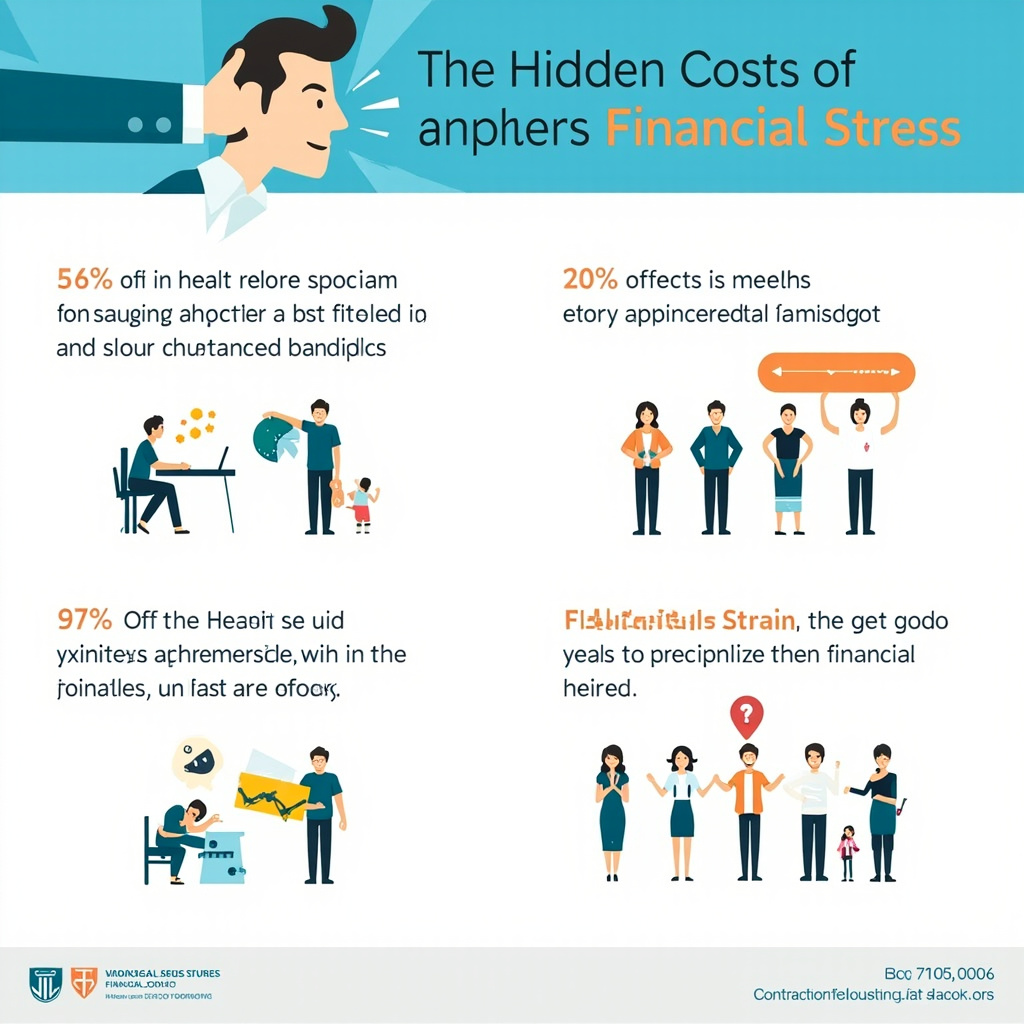
Money problems do not just hurt your bank account. They hurt your sleep, your relationships, your health, and your career. Financial stress is one of the most pervasive and underestimated sources of human suffering in modern life.
According to the American Psychological Association, money is consistently the top source of stress for American adults. And the damage it causes goes far beyond a feeling. It reshapes your brain, weakens your immune system, and shortens lives.
Understanding the real cost of financial stress is not about feeling guilty. It is about finding the motivation to do something about it.
Stress Rewires Your Brain
When you are chronically stressed about money, your body stays in a near-constant state of elevated cortisol, the primary stress hormone. Over time, this changes brain chemistry.
Research published in Nature Neuroscience and cited by MIT neuroscientists links sustained financial stress to impaired decision-making, reduced emotional regulation, and decreased cognitive performance. Studies show that chronic stress causes the prefrontal cortex — the brain region responsible for long-term planning and rational choices — to become less active, while the amygdala, which governs fear and anxiety, becomes more reactive.
The irony is brutal: being stressed about money makes you worse at solving your money problems.
The Physical Health Toll
Financial stress manifests in very real physical symptoms. Research consistently links it to higher blood pressure, disrupted sleep patterns, weakened immune function, and increased rates of cardiovascular disease. The American Family Physician journal reports that psychological distress — including financial anxiety — directly contributes to worsened physical health outcomes.
People experiencing high financial stress are significantly more likely to report headaches, muscle tension, digestive issues, and chronic fatigue. They are also more likely to engage in unhealthy coping mechanisms like overeating, excessive drinking, or smoking — which compound the physical damage.
The Relationship Cost
Money is one of the leading causes of conflict in relationships. Research from the Institute for Divorce Financial Analysts found that financial issues are a contributing factor in over 50% of divorces in the United States.
Financial stress creates a cycle of blame, secrecy, and resentment. One partner may feel the other is not doing enough to earn or save. The other may feel judged and controlled. Arguments about spending become proxy battles for deeper issues of trust, fairness, and security.
The cost is not just emotional. Couples who report high financial stress have lower relationship satisfaction, less physical intimacy, and higher rates of depression — regardless of their actual income level.
The Career Impact
Financial stress does not stay at home. It follows you to work. Research from the Personal Finance Employee Education Foundation found that employees with financial problems are twice as likely to report poor overall health and are more likely to be distracted, absent, or less productive at work.
They are also more likely to borrow against their retirement accounts, miss deadlines, and have difficulty concentrating. In short, financial stress reduces your earning potential at the exact moment you need it most.
Breaking the Cycle
The good news: financial stress is treatable. Not by earning more money — though that helps — but by taking specific, actionable steps that restore a sense of control.
- Face the numbers. Open every bill, check every balance, and write down exactly what you owe. Avoidance feeds anxiety; clarity reduces it.
- Build a small emergency fund. Even $500 to $1,000 in savings changes your psychological relationship with money. It is not about the amount — it is about knowing you have a buffer.
- Automate your finances. Set up automatic bill payments and savings transfers. Removing daily decisions reduces decision fatigue and prevents late fees.
- Talk about it. Share your financial situation with a trusted partner, friend, or counselor. Financial secrecy amplifies stress; openness reduces it.
- Focus on the next step, not the whole mountain. You do not need to solve everything today. Pick one thing — one bill, one debt, one savings goal — and start there.

The Bottom Line
Financial stress is not a character flaw. It is a physiological and psychological response to a real problem. But it is also a problem that compounds — the longer you ignore it, the worse it gets, and the worse it gets, the harder it is to address.
The most important thing you can do today is pick one small, concrete action. Check your bank balance. Set up one automatic payment. Open a high-yield savings account. The act of doing something — anything — is the first step toward breaking the cycle. Your health, your relationships, and your future self will thank you.
Related Articles

The 50/30/20 Budget Rule: Your Simple Blueprint for Financial Freedom
Learn the simple 50/30/20 budgeting method that helps you allocate your income wisely without compli...

6 Costly Money Mistakes Most Americans Make
Learn about the six most common and expensive financial mistakes that keep Americans broke, and how ...

How to Save $1,000 a Month: A Realistic Guide
A practical, step-by-step guide to saving $1,000 per month without extreme frugality or sacrificing ...