Published on
- 4 min read
The Real Cost of Summer Vacation in 2026 — And How to Take One Without Breaking the Bank

Every year, American families look forward to summer as the season of rest, travel, and memory-making. The kids are out of school, the weather is finally warm, and for a few precious weeks, life feels a little lighter. But in 2026, the cost of a summer vacation has reached a level that catches most families off guard.
The trip that used to be the highlight of the year has quietly become one of the largest discretionary expenses on the annual budget — and unlike a mortgage or a car payment, it arrives with no warning and no amortization schedule.
According to recent industry analysis, a family of four planning a week-long domestic vacation in June 2026 should expect to spend an average of $4,000 or more before anyone buys a souvenir. The most expensive destinations in the country top $7,800 for a single week. For international travel, the numbers climb even higher.
Why Vacation Costs Have Surged
Several forces have converged to push summer travel costs to their current level.
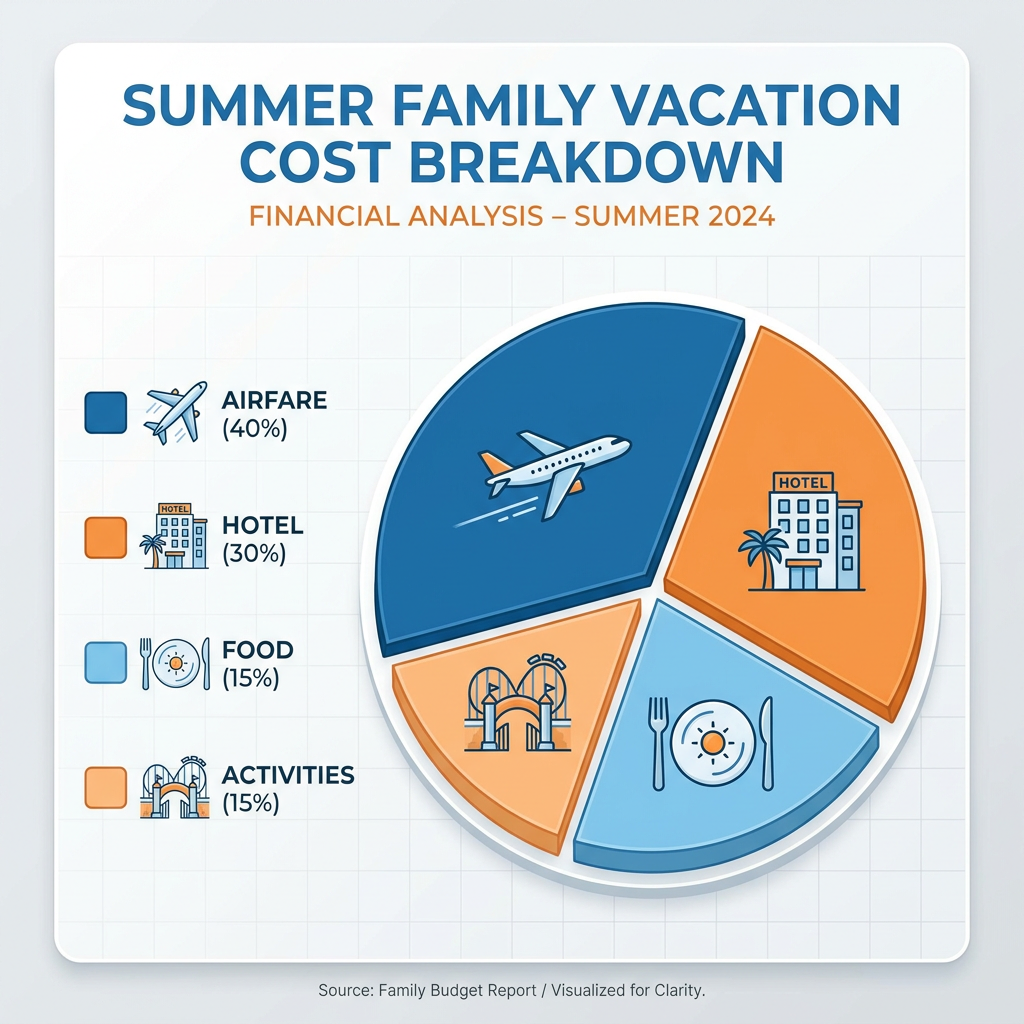
Jet fuel prices have climbed substantially over the past two years, and airlines have passed nearly all of that increase on to consumers. A domestic flight that cost $300 two years ago might now cost $450 for the same route on the same dates.
Hotel pricing has followed a similar trajectory. Post-pandemic demand has remained strong while new hotel construction has lagged, creating sustained upward pressure on room rates. In popular destinations, the average nightly rate for a mid-range hotel in summer 2026 is significantly higher than in 2023, with many markets reporting double-digit increases.
Food costs have risen steadily across the country, and meals on vacation tend to be more expensive than at home — restaurant meals, resort pricing, and the inevitable “we are on vacation” splurges add up fast.
The Hidden Costs Nobody Talks About
Beyond the obvious expenses — flights, hotels, meals — summer vacations carry hidden costs that most families underestimate.
Pet boarding averages $25 to $50 per night. For a week-long trip, that is $175 to $350. House-sitting or plant care services add another $100 to $200. Airport parking for a week runs $70 to $150. Travel insurance, increasingly necessary given flight cancellation rates, adds $50 to $200. Souvenirs, activities, and unplanned excursions can easily consume another $500 to $1,000.
By the time you add it all up, the “$3,000 vacation” has become a $5,000 vacation — and that is before anyone gets home and realizes they need to restock the refrigerator.
How to Take a Great Vacation Without the Financial Hangover
Start with a hard budget. Before you browse a single travel site, decide exactly how much you can afford to spend. Not how much you want to spend — how much you can afford. Then build your trip within that number.
Travel in shoulder season. The weeks immediately before and after peak summer dates — late May and early September — offer dramatically lower prices on flights and hotels, with weather that is still excellent in most destinations.
Book flights on Tuesdays. Airline pricing algorithms tend to release deals on Monday evenings, making Tuesday morning the optimal time to book domestic flights.
Use credit card rewards strategically. If you have been accumulating points or miles, summer vacation is the time to use them. A family of four can often cover flights or hotels entirely with rewards, cutting the trip cost by 30 to 50%.
Cook some meals. A hotel with a kitchen or kitchenette allows you to prepare breakfast and lunch, saving $50 to $100 per day for a family of four. Even preparing one meal per day makes a meaningful difference.
Set a daily spending limit. Decide in advance how much you will spend each day on activities, meals, and extras. When you hit the limit, the spending stops. This prevents the “we are on vacation” rationalization that destroys budgets.

The Bottom Line
Summer vacation is not optional for most families — it is a cultural and emotional necessity. The memories, the bonding, the break from routine: these things matter. But they do not have to cost $7,000.
With advance planning, a hard budget, and a few strategic choices, you can have a memorable summer vacation without the financial hangover. The goal is not to skip the trip. It is to come home with great memories and a bank account that is not in crisis.

Related Articles

The 50/30/20 Budget Rule: Your Simple Blueprint for Financial Freedom
Learn the simple 50/30/20 budgeting method that helps you allocate your income wisely without compli...

6 Costly Money Mistakes Most Americans Make
Learn about the six most common and expensive financial mistakes that keep Americans broke, and how ...

How to Save $1,000 a Month: A Realistic Guide
A practical, step-by-step guide to saving $1,000 per month without extreme frugality or sacrificing ...